
Why Does My Ceiling Get Wet When It Rains? Common Causes Explained
Ik
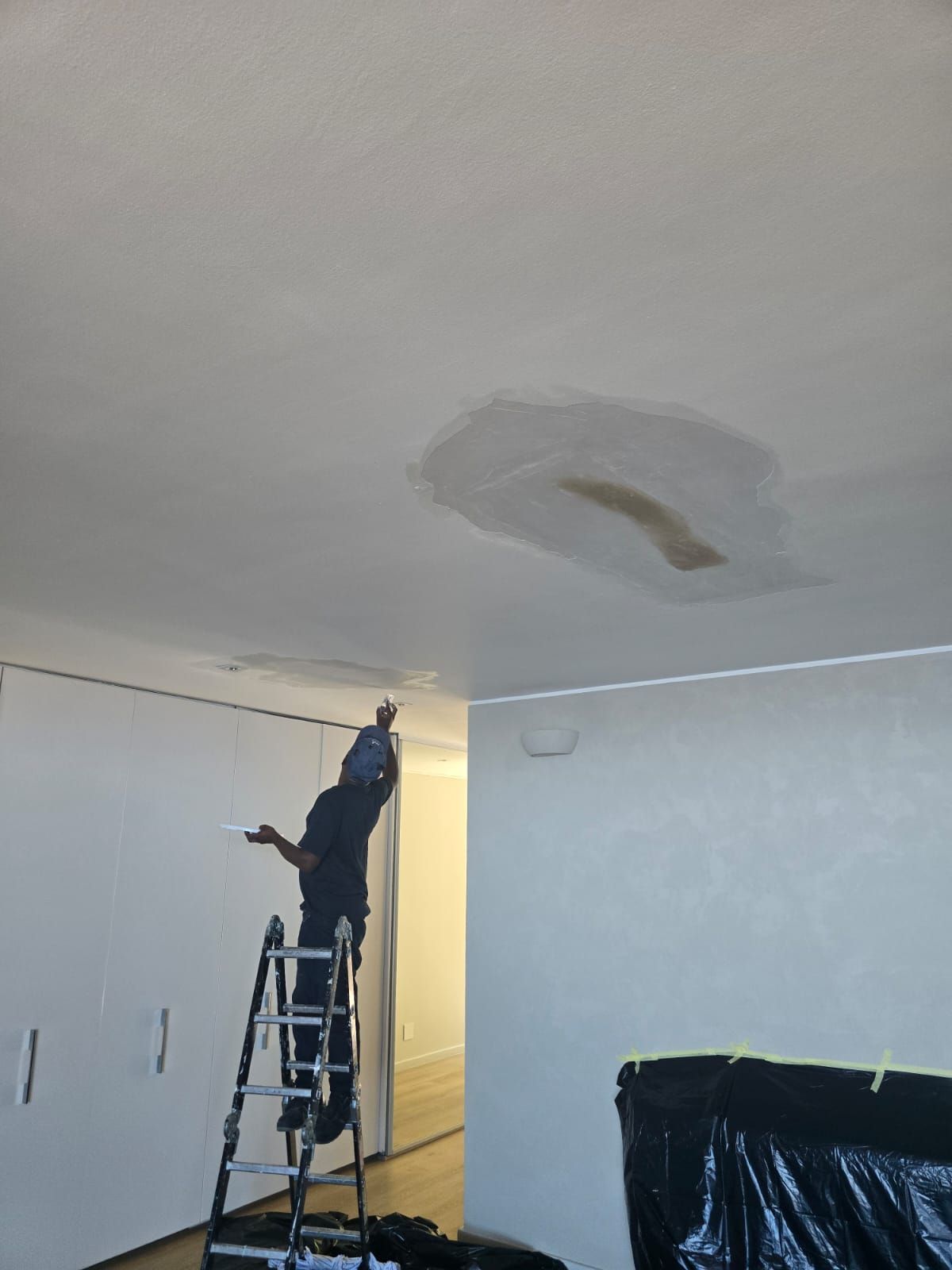
A wet ceiling after rain is one of the most common calls we receive at iKapa Waterproofing, particularly during Cape Town's winter months. It's easy to dismiss a damp patch as something minor, especially if it's small or seems to dry out on its own. But water inside your home's structure causes damage that compounds quickly, and what looks like a surface stain is often the visible result of a deeper problem.
This guide covers the most common causes of a wet ceiling after rain, how to tell them apart, and what each one means for your home.
Cause 1: Failed Roof Waterproofing
The most common cause in Cape Town homes, and particularly in older properties with flat or low-pitch concrete roofs, is a failed waterproofing membrane.
Waterproofing membranes don't last forever. Over time they crack, bubble, separate from the substrate, or develop pinholes that let water through under sustained rainfall. Cape Town's UV exposure and temperature cycling accelerates this deterioration, especially on membranes that weren't properly specified for the local environment.
How to tell: A wet patch that appears after every rain event, often in the same location. The stain may grow over successive winters as the membrane deteriorates further. Suburbs with a high concentration of flat-roofed homes, Pinelands, Claremont, Bellville, Rondebosch, tend to see the most membrane-related leaks.
Cause 2: Cracked or Dislodged Roof Tiles
Cape Town's South Easter puts significant lateral force on pitched roofs. Tiles can crack under impact, shift out of alignment, or lift entirely, particularly on older roofs where the mortar bedding has deteriorated.
Even a single displaced tile creates an unobstructed entry point for rainwater. In a sustained downpour, one missing tile can funnel a significant volume of water into the roof space before the storm ends.
How to tell: The dripping appears during heavy rain only and is more pronounced on the windward side of the house. You may be able to see broken or shifted tiles from the ground after the storm.
Cause 3: Blocked or Overflowing Gutters
When gutters fill with leaves, debris, and sediment, water has nowhere to go during heavy rainfall. It backs up, overflows the gutter edge, and runs behind the fascia board, where it often finds its way into the roof space or down the interior of the exterior wall.
In a Cape Town downpour, even partially blocked gutters can overflow rapidly. Gutters should be cleared at least twice a year, before winter and after autumn leaf fall.
How to tell: Water visible running down the outside of the wall during rain. Wet patches appearing near the ceiling perimeter rather than the centre. Sagging or overflowing gutters visible from outside.
Cause 4: Flashing Failure
Flashing is the metal or bitumen sealing material installed around roof penetrations, chimneys, skylights, roof vents, and any point where the roof surface meets a vertical structure. When flashing corrodes, lifts, or cracks, it creates a direct entry point for rainwater.
Because flashing failure isn't visible from the ground, it's one of the most consistently underdiagnosed causes of ceiling leaks. A homeowner may re-seal their roof membrane several times without ever resolving the actual source.
How to tell: The leak appears near a chimney, skylight, or roof vent. It may only occur at certain wind directions, when rain is being driven against a specific face of the roof.
Not sure what's causing your leak? iKapa Waterproofing offers assessments across Cape Town. We'll identify the source and give you a specific repair quote.
Cause 5: Condensation, and How to Tell It Apart
Condensation is frequently blamed for ceiling moisture, but it's worth being precise about what condensation actually looks like. True condensation appears as small, uniform droplets distributed across a surface, typically overnight when temperatures drop and warm indoor air meets a cold ceiling or roof structure.
A wet patch that appeared after a rain event, that is localised to one area, or that grows in size over time is almost certainly not condensation.
How to tell: Condensation is uniform, appears overnight regardless of rainfall, and typically clears as temperatures rise. A roof leak is localised, worsens during and after rain, and leaves a permanent stain as the ceiling board dries. If you're seeing a damp patch after rain, condensation is not the cause.
Cause 6: Rising Damp Reaching the Ceiling
Rising damp typically manifests in walls, the gradual upward migration of moisture from the ground through masonry. In most cases it stops well below ceiling height. But in older homes with significantly compromised damp proofing, moisture can migrate through wall cavities and appear at ceiling level, particularly in corners or along the wall-ceiling junction.
How to tell: Damp that appears even during dry weather. Often accompanied by efflorescence, white salt deposits, on the wall surface below. The affected area is usually in a corner or against an external wall.
What Happens If You Leave It
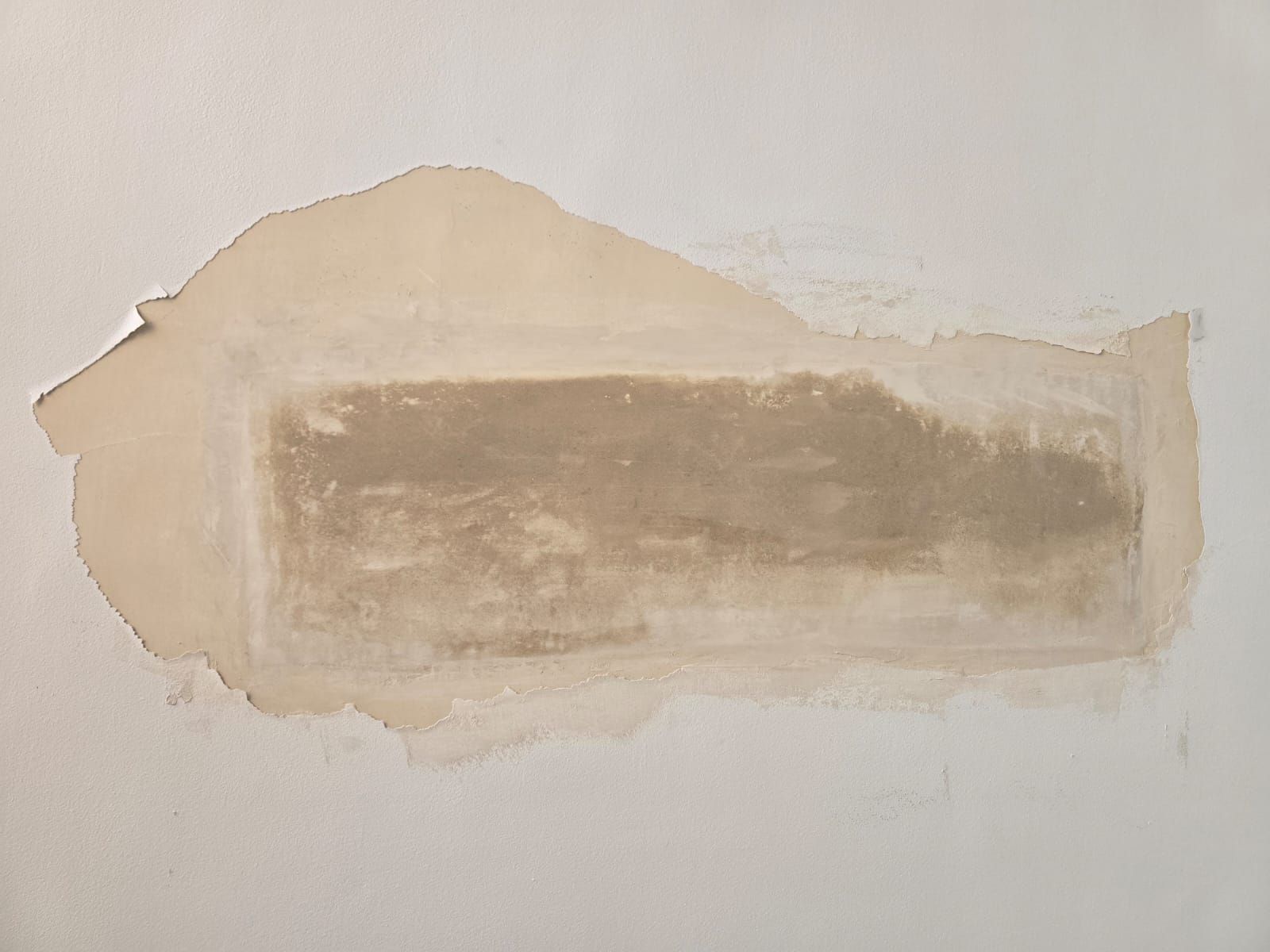
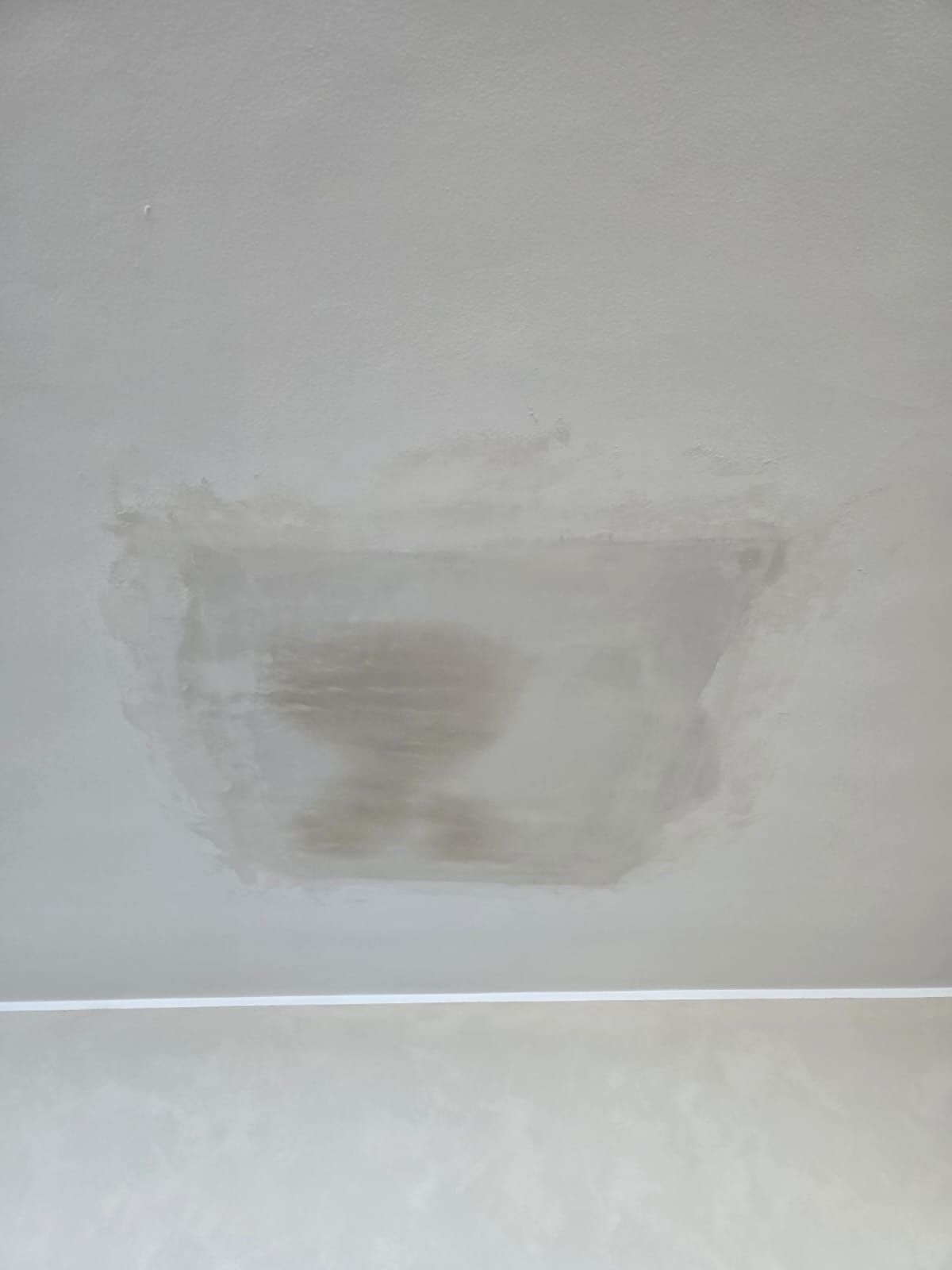
Ceiling moisture that isn't addressed doesn't stay contained. Over time, ceiling boards absorb water, swell, stain permanently, and eventually fail structurally. Timber roof components begin to rot. Mould establishes in the ceiling cavity, which has health implications for the household. Paint adhesion fails, requiring repeated repainting without resolving the underlying cause.
What starts as a small stain after a single rain event can become a full ceiling replacement within one or two winter seasons if the source isn't addressed.
How to Confirm the Source
The challenge with ceiling leaks is that the entry point on the roof is often some distance from where the water appears inside. Water travels along beams and roof structures before pooling and breaking through at a low point, which means the stain on your ceiling may not be directly below the problem.
The most reliable way to confirm the source is a professional roof inspection. A waterproofing contractor can assess the membrane condition, tile integrity, gutter flow, and flashing in a single visit, and provide a specific diagnosis rather than a guess.
Frequently Asked Questions
Can a wet ceiling dry out on its own?
The surface of a ceiling board may dry if the leak source stops, but moisture absorbed into the board and surrounding structure will remain. Mould can establish within 24 to 48 hours in wet conditions. Even if the ceiling appears to dry out, the underlying cause needs to be identified and resolved before the next rain event.
Is a wet ceiling covered by home insurance?
Most home insurance policies cover sudden and accidental damage caused by storms. Gradual leaks caused by lack of maintenance are typically excluded. Photograph and video the damage before any repair work begins, and contact your insurer as soon as possible.
How long does a waterproofing repair last?
A professionally applied waterproofing system on a flat roof typically lasts 8 to 15 years, depending on the product and exposure conditions. Cape Town's UV intensity and wind environment mean that cheaper products deteriorate significantly faster than properly specified premium membranes.